 Aug 26,2026
You’ve seen the spec sheet: 200 cups per minute. You do the math—1,440 minutes in a day, 200 cups per minute, that’s nearly 288,000 cups daily. But when production starts, the shift report tells a different story. The machine isn’t broken, and the manufacturer wasn’t lying. The gap between theoretical speed and real-world output is real, and it comes down to factors that no brochure can fully capture.
According to market research data, the global paper cups market was valued at approximately US$9.0 billion in 2025** and is projected to reach **US$10.8 billion by 2032, growing at a CAGR of 2.5%. With coffee chains, quick-service restaurants, and food delivery services expanding worldwide, demand for paper cups continues to rise. For manufacturers scaling up to meet this demand, understanding what truly drives production output isn‘t just helpful—it’s essential for capacity planning and profitability.
This article examines the key factors that determine paper cup production output, providing a decision framework to help you evaluate equipment and plan your production line effectively.
Machine Speed vs Real Output: Understanding the Gap
The most common mistake in production planning is treating brochure speed as achievable output. In reality, the speed printed on a machine‘s spec sheet represents ideal conditions—a single cup size, perfect paper stock, a skilled operator, and zero interruptions.
What “Cups Per Minute” Actually Means
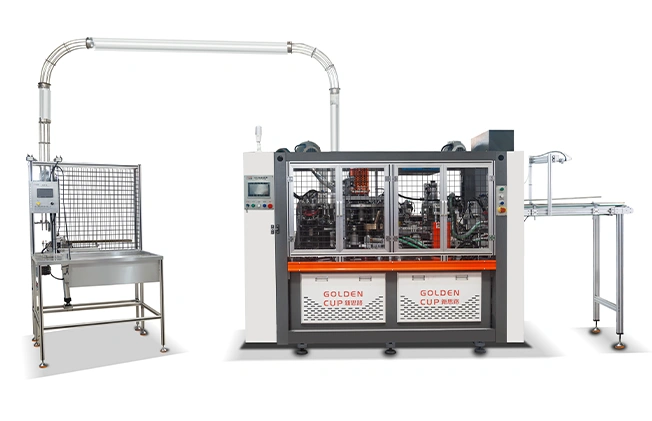
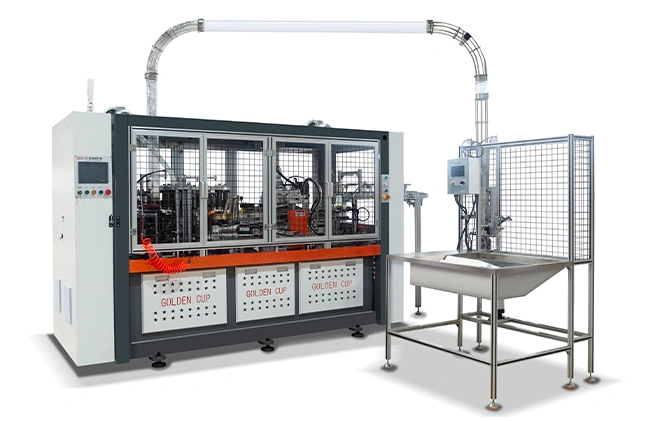
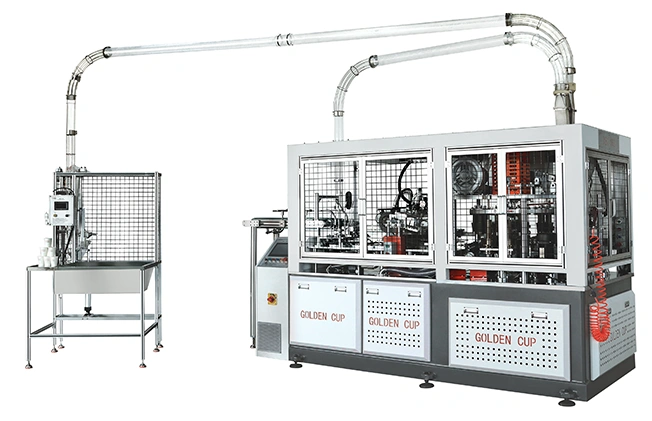
Production speed in paper cup manufacturing is measured in CPM (cups per minute). Higher CPM results in shorter forming time and higher effective loading rate during the curling process. However, the range is broad: paper cup production lines typically operate at speeds from 50 to over 200 CPM, with premium models reaching 300+ CPM for large-scale contract manufacturers.
The 85% Rule
Industry experience shows that a realistic stable running speed is typically 85–90% of the brochure-rated maximum. Running at 100% capacity continuously generates excessive heat and vibration, accelerating wear on bearings and cams. Smart factory operators run machines at this “sweet spot” to ensure longevity and reduce jam rates.
Speed by Machine Type
Different machine configurations deliver different output ranges:
| Machine Type | Typical Speed Range (CPM) | Best For |
|---|---|---|
| Small single-lane (mechanical) | 40–60 | Startups, small batches, custom sizes |
| Medium-speed | 80–90 | Standard production, established operations |
| High-speed single-wall (servo) | 140–200 | Coffee chains, high-volume takeaway cups |
| Double-wall | 60–100 | Insulated cups for hot beverages |
| Bowl / large cup (16–32oz) | 50–70 | Soup, noodles, family-size portions |
For a detailed look at how different machine architectures—vertical versus horizontal—affect production speed and stability, see our paper cup machine series overview.
Precision and Sealing Technology: The Quality-Output Connection
Speed alone doesn‘t determine output. A machine that produces cups quickly but with high defect rates delivers lower effective output than a slower machine with near-zero defects. Two factors are critical here: mechanical precision and sealing technology.
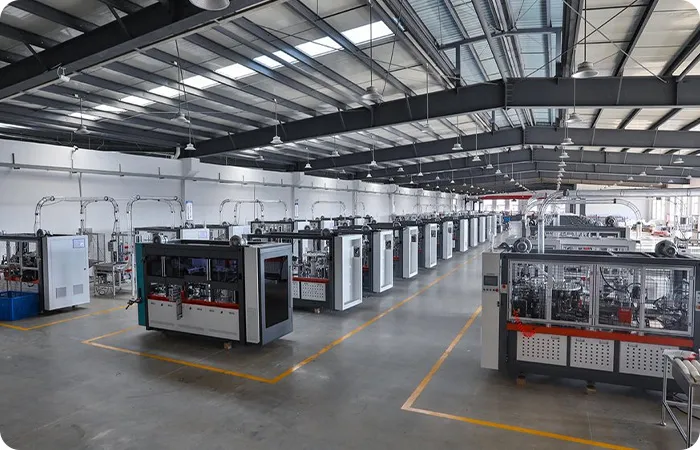
The Precision Factor
Mechanical precision directly affects both speed and quality. When machine precision is low, materials transfer slowly between stations, leading to low processing efficiency. High-precision manufacturing—with repeatability at ±0.01mm—enables complex forming operations at high speeds while maintaining consistent quality. This level of precision means fewer jams, less material waste, and higher effective output.
Sealing: The Critical Process Step
Consistent heat sealing is critical in paper cup manufacturing, ensuring both liquid tightness and a visually appealing finish. Insufficient sealing can lead to aesthetic defects or leakage, which—in the case of hot takeaway beverages—could even pose a safety risk to consumers.
A peer-reviewed study published in BioResources (2026) compared hot-air and ultrasonic sealing technologies in paper cup manufacturing. The research found that ultrasonic sealing has an advantage in sealing consistency over hot-air sealing. The study also developed a mechanical testing device to objectively compare side seal strength, replacing the subjective hand-peel method. Ultrasonic sealing eliminates warm-up time between changeovers and allows consistent sealing across a wider range of paper weights.
The sealing process requires three conditions:
-
Sufficient heat—delivered via convection, conduction, or friction—to melt the polymer sealant
-
Pressure—to ensure proper wetting and penetration of the sealant
-
Adequate time—for molecular chains to entangle
Challenges arise when any of these conditions are difficult to achieve—for instance, due to weak thermal properties of certain polymers or short dwell times, as often seen in high-speed cup-forming processes.
The practical implication: a machine with superior sealing technology and precision engineering will deliver higher effective output because fewer cups are rejected. A 1% reduction in defect rate on a line producing 100,000 cups per day means 1,000 more saleable cups daily. To understand how different sealing approaches and machine configurations perform across various production scenarios, explore our solution overview for paper container production.
Material Selection and Cup Design: Hidden Output Variables
The materials you run and the cups you produce have a significant impact on achievable output—often more than buyers expect.
Paper Weight and Coating
Paper coating type affects sealing speed:
-
Single PE (polyethylene) coated paper seals quickly
-
Double PE requires slightly more heat and dwell time
-
Water-based and PLA-coated papers may need temperature adjustments that slow the cycle
Heavier paperboard (higher gsm) requires more heat and longer forming cycles, reducing throughput. Similarly, materials with inconsistent moisture content—above 8% or below 4%—can cause feeding issues and jams.
Cup Size and Wall Configuration
Cup size directly affects cycle time:
-
A 4oz espresso cup runs faster than a 16oz large cup because the forming cycle is shorter
-
Double-wall cups require an extra bonding station, reducing speed by 20–30% compared to single-wall on the same machine
-
Bowl and large-format cups (16–32oz) run slower because the larger diameter requires more heating and longer cooling times
A 2026 study published in the Journal of Manufacturing Processes examined how curling depth and production speed affect cup quality. The research demonstrated that a curling depth of 4.3mm provides improved seal consistency and structural uniformity, particularly at lower production speeds (80 CPM), minimizing the risk of defects commonly observed in fast, high-volume manufacturing settings.
This matters for output planning: if your product mix includes double-wall or large-format cups, you need to factor in the lower throughput when calculating capacity.
Material Standards
For manufacturers exporting to regulated markets, material compliance is non-negotiable. China‘s GB 4806.8-2022 standard for food-contact paper and paperboard materials—effective June 30, 2023—specifies sensory requirements and chemical safety limits. The standard was revised to add limits for 1,3-dichloro-2-propanol and 3-chloro-1,2-propanediol, among other updates. Similarly, the EU Regulation (EC) No 1935/2004 governs materials intended to come into contact with food.For specific guidance on cup sizes and material compatibility across different product types, see our application pages for paper cups, paper bowls, and double-wall insulated cups.
The Real Output Formula: Calculating What You Can Actually Deliver
If brochure speed isn‘t the number to plan by, what is? Here’s a practical framework for calculating realistic production capacity.
Step 1: Determine Your Stable Speed
Start with the brochure speed and apply the 85% rule. If a machine is rated at 140 CPM, your stable running speed is approximately 120 CPM.
Step 2: Account for Downtime
You aren‘t producing 60 minutes every hour. Factor in:
-
Roll changes: Every 45–60 minutes, the paper roll runs out. Allow 3–5 minutes for splicing
-
Lubrication and cleaning: 20 minutes of preventive maintenance per shift
-
Minor jams: Even the best machine jams occasionally; clearing takes 2–5 minutes
Step 3: Apply the OEE Factor
In a well-managed factory, Overall Equipment Effectiveness (OEE) is typically 85–90%. Research on paper cup machines has shown that while actual OEE values can vary—one study found an average of 76.98% on a specific machine—the ideal standard OEE value is 85%. This gap between actual and ideal highlights the importance of systematic performance monitoring and continuous improvement.
Realistic Daily Output Examples
For a standard 20-hour production day (two shifts):
| Machine Type | Brochure Speed | Stable Speed | Real Daily Output (20 hrs @ 85% OEE) |
|---|---|---|---|
| Low-speed (chain) | 50 CPM | 45 CPM | ~45,900 cups |
| Medium-speed | 90 CPM | 80 CPM | ~81,600 cups |
| High-speed (servo) | 140 CPM | 120 CPM | ~122,400 cups |
Step 4: Consider the Entire Production Line
Your forming machine can only run as fast as you feed it. If you produce 120,000 cups daily, you need roughly 1 ton of printed and die-cut paper daily. Capacity planning must be balanced across the entire line—printing, die-cutting, forming, and packaging.
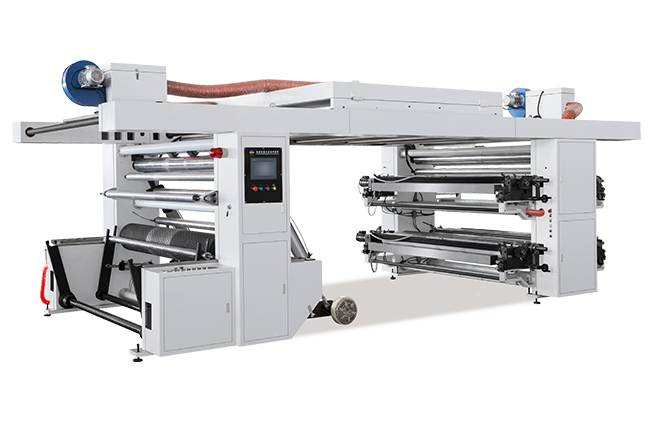
A 10-minute changeover versus a 40-minute changeover across three size changes per shift adds 90 minutes of productive time—roughly a 15–20% increase in effective capacity without any increase in machine speed. For a complete picture of how auxiliary equipment integrates with forming machines to optimize total line output, visit our auxiliary equipment overview.
H2: Real-World Application: Two Production Scenarios
Scenario A: High-Volume Coffee Chain Supplier
A manufacturer supplying a national coffee chain produces predominantly 8–12oz single-wall cups. The production mix is consistent, with few changeovers.
Key considerations:
-
High-speed servo machine (140–200 CPM range)
-
Single-wall configuration maximizes throughput
-
Consistent cup size minimizes changeover downtime
-
Priority on sealing consistency for leak-proof cups
Expected output: ~120,000 cups per 20-hour day from a single high-speed line.
Scenario B: Custom Order Producer
A manufacturer serving multiple brands produces varied cup sizes (4–16oz), including both single-wall and double-wall configurations.
Key considerations:
-
Medium-speed machine with quick changeover capability
-
Changeover frequency significantly impacts effective output
-
Double-wall production runs 20–30% slower
-
May need dedicated lines for different cup types
Expected output: Variable; capacity planning must account for product mix and changeover time.
Next Steps: From Decision Framework to Equipment Evaluation
Understanding the factors that affect paper cup production output is the first step in making an informed equipment decision. The key takeaways:
-
Brochure speed is not real output—plan using stable speed (85% of max) and apply an OEE factor of 85–90%
-
Precision matters—±0.01mm repeatability reduces defects and increases effective output
-
Sealing technology impacts both quality and speed—ultrasonic sealing offers consistency advantages, as confirmed by recent peer-reviewed research
-
Material and cup design directly affect throughput—double-wall and large-format cups run slower
-
Total line balance is essential—the forming machine can‘t outrun your printing and feeding capacity
Once you’ve clarified these key decision factors—required capacity, typical cup sizes, material types, and changeover frequency—comparing equipment specifications is your next step. You can review high‑speed models for high‑volume production or explore flexible‑setup options designed for fast changeovers. Find actionable long‑run maintenance advice for your paper cup machine in our service overview. For the latest industry insights and technical updates, browse our news and blog section.
Related Reading
-
Paper Cup vs Paper Bowl Production: Key Differences in Machine Selection
-
How to Plan a Flexible Paper Cup Production Line for Multiple Cup Sizes
-
Understanding Double-Wall Cup Production: Process, Challenges, and Solutions
-
The Role of Auxiliary Equipment in Maximizing Paper Cup Line Output
-
How Does a High Speed Paper Cup Machine Improve Production Efficiency?