 Aug 19,2026
A production line that runs one cup size perfectly is relatively simple to design. The real challenge emerges when you need to produce multiple sizes, different materials, or various cup types on the same equipment. Many manufacturers discover that their "high-speed" line delivers far less than its rated output once changeovers, material adjustments, and quality checks are factored in.
This guide provides a practical, step-by-step framework for planning a disposable cup production line that balances speed with flexibility. By following these steps, you can design a line that adapts to changing orders without sacrificing throughput.
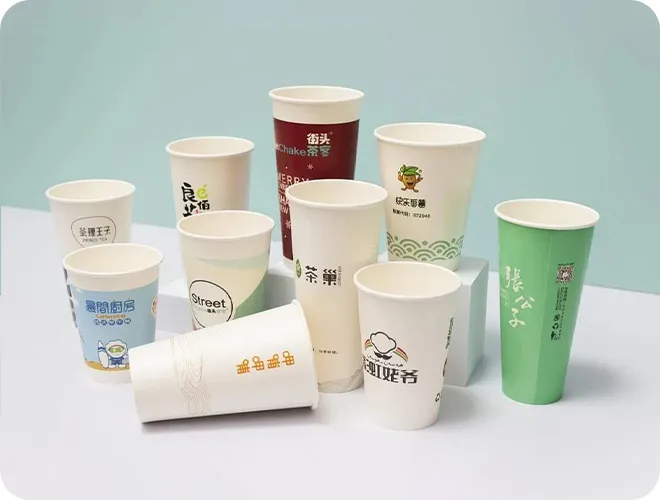
What Does a Flexible Disposable Cup Production Line Need?
A flexible production line must handle three core requirements simultaneously:
Product Variety: The ability to produce different cup sizes (e.g., 4oz to 24oz), materials (PE-coated, PLA-coated, water-based), and structures (single-wall, double-wall, sleeved) on the same equipment without excessive downtime.
Sustained Throughput: Maintaining consistent output across production runs, regardless of product changes. A line that takes 30 minutes to change over may lose 15–20% of its effective capacity over a typical shift.
Quality Consistency: Producing cups with reliable seals, smooth rims, and leak-proof bottoms across all product variations. Material changes—particularly switching to PLA-coated papers—often require different heating parameters to maintain seal quality.
Labor Efficiency: At speeds above 80 cups per minute, automatic collection and stacking become essential. Without automation, multiple operators are needed just to handle finished products, eliminating the labor savings that high-speed equipment is supposed to deliver.
A flexible line is not simply about having multiple molds. It is about having the process control, automation, and changeover systems that allow you to switch products with minimal disruption to your production rhythm.
Step 1: Define the Cup and Container Products
Before specifying any equipment, document your expected product portfolio. This step establishes the technical requirements that all subsequent decisions must satisfy.
| Product Attribute | Questions to Answer | Impact on Line Design |
| Size Range | What cup/bowl sizes will you run? (e.g., 2oz–16oz, or up to 46oz) | Determines mold inventory, changeover frequency, and whether you need multiple turret configurations |
| Volume by Size | What percentage of production is each size? | Identifies which sizes justify dedicated tooling versus changeover setups |
| Cup Structure | Single-wall, double-wall, or insulated sleeves? | Double-wall production requires additional stations; typically 60–100 cups/min versus 120–200 cups/min for single-wall |
| Cup Shape | Round, square, or oval containers? | Specialty shapes require custom mold design and may affect forming station configuration |
| Branding Requirements | Printed designs or plain cups? | Influences whether you need in-house printing capability or will outsource pre-printed blanks |
Product Prioritization Matrix
Rank your products by volume to determine changeover strategy:
High-Volume Products (>60% of production): Consider dedicating separate machines to these sizes to eliminate changeovers entirely. While this requires higher initial investment, it maximizes throughput for your best-selling items.
Medium-Volume Products (20–60% of production): Plan for scheduled changeovers with quick-change tooling. These sizes justify investing in mold carriers that allow 5–10 minute changeover times.
Low-Volume / Specialty Products (<20% of production): Accept longer changeover times or outsource production. These products do not justify the investment in dedicated tooling unless they offer premium margins.
Step 2: Match Materials With Production Requirements
Paper cup machines are calibrated for specific paper properties. Material compatibility is not optional—it determines seal quality, defect rates, and whether you can run biodegradable products.
Paper Property Checklist
-
Grammage Range: Verify the machine can handle your planned paper weights. Bowl machines typically handle 260–400 gsm, while standard cup machines run 180–350 gsm. Machines with insufficient forming force will struggle with heavier paper, producing inconsistent bottoms and weak side seams.
-
Coating Type: PE-coated paper (polyethylene), PLA-coated (biodegradable), and water-based coatings each require different heating and sealing configurations. PE requires careful temperature control to avoid burning or incomplete melting. PLA requires lower, more stable heat application to prevent degradation.
-
Material Consistency: In high-volume production, quality fluctuations that were tolerable at low speeds become significant sources of jams and rejects. If your paper supplier changes frequently, look for machines with broader thermal adjustment ranges.
-
Stiffness and Elasticity: The paper's resistance to folding and its ability to hold shape affect forming stability. Heavier papers have higher bending resistance, requiring more forming force to achieve consistent folds.
Sealing Technology Decision
| Material Type | Recommended Sealing Method | Rationale |
| Single PE-coated hot drink cups | Hot air (copper-based) | Lower initial cost; simpler maintenance |
| Double PE-coated cold drink cups | Ultrasonic | Seals from inside out without burning outer coating |
| PLA biodegradable cups | Ultrasonic | Heat-sensitive material requires precise, non-contact sealing |
| Mixed portfolio (PE + PLA) | Ultrasonic with adjustable settings | Provides the broadest material compatibility |
Step 3: Calculate Required Production Capacity
Capacity planning drives every subsequent decision. The goal is not just to hit a speed number, but to design a line that meets your target output reliably.
The Capacity Calculation Formula
Target Production Rate = (Monthly Target ÷ Operating Days ÷ Shift Hours ÷ Minutes per Hour) ÷ Capacity Utilization Factor
Example Calculation:
-
Target: 2,000,000 cups per month
-
Operating days: 24 days/month
-
Shift length: 8 hours/day
-
Required per hour: 2,000,000 ÷ 24 ÷ 8 = 10,416 cups/hour
-
Required per minute: 10,416 ÷ 60 = 174 cups/minute
-
Recommended machine rating (80% utilization): 174 ÷ 0.80 = 217 cups/minute
The 80% Capacity Utilization Rule
Machines rated for 100 cups per minute typically run stably at 80–85 cups per minute over long shifts. Pushing a machine to its rated maximum 24/7 accelerates wear, increases vibration, and leads to more frequent failures.
Factors Affecting Sustainable Speed:
-
Changeover frequency (each changeover reduces effective capacity)
-
Material quality variations (defects cause rejections)
-
Operator skill level (manual interventions slow the line)
-
Maintenance schedule (planned downtime must be included)
Capacity Reserve Planning
For growing businesses, plan for 15–20% additional capacity beyond your current target. This provides headroom for demand increases without requiring immediate equipment replacement.
Step 4: Choose the Right Forming Technology
The drive system and forming mechanism determine machine reliability, maintenance frequency, and long-term performance.
Drive System Comparison
| Drive Type | Typical Speed Range | Best For | Maintenance Profile |
| Chain-driven | 40–80 cups/min | Entry-level, low-volume production | Chain stretch requires regular adjustment; typical service life 3–5 years |
| Open cam | 80–130 cups/min | Mid-volume single-size production | Exposed cams require manual lubrication; dust contamination risk |
| Enclosed oil-bath gearbox | 130–200+ cups/min | High-volume continuous operation | Sealed housing with continuous spray lubrication; supports 10+ years of operation |
For a detailed overview of available drive technologies, you can review the Paper Cup Machine series overview.
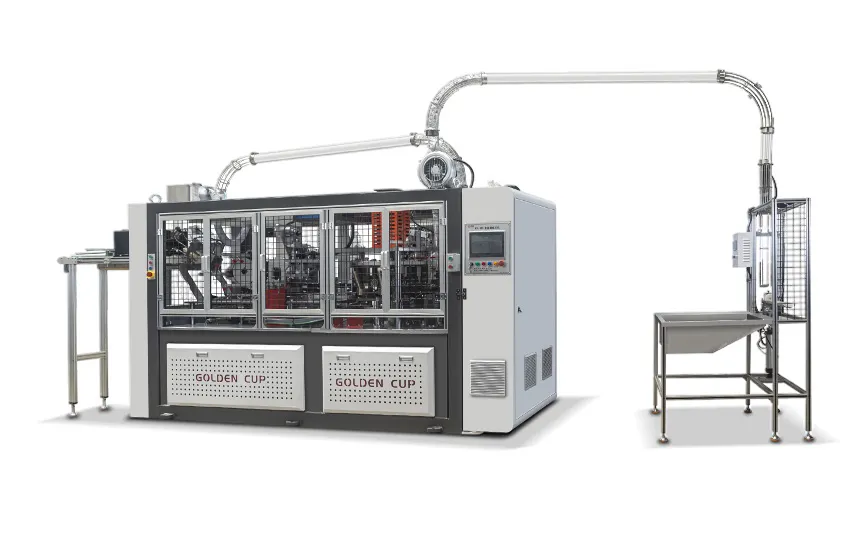
Forming Station Configuration
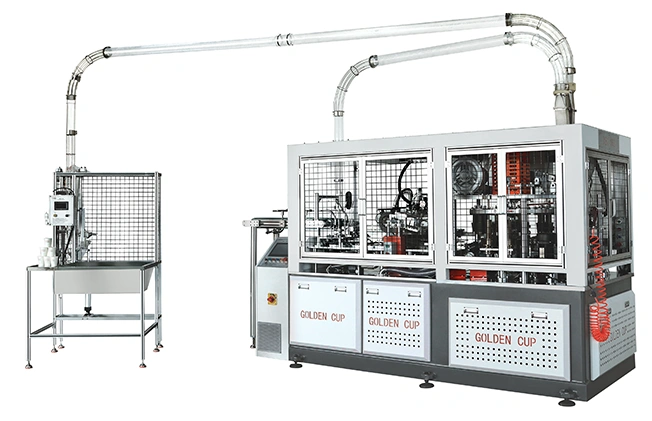
The number and arrangement of forming stations affect both speed and material flexibility. A typical high-speed machine performs 10–12 operations including bottom punching, blank heating (multiple stations), hugging (sleeve formation), bottom folding, bottom knurling, and rim curling (multiple stations).
Why station count matters: Machines with multiple heating and curling stations offer greater material flexibility. Three rim curling stations can achieve more complete curl and handle higher-grammage papers more consistently than single-stage curling.
Technology Decision Framework
Choose a servo-driven machine with recipe storage and quick-change tooling if:
-
You produce multiple sizes with frequent changeovers
-
You want to minimize operator training requirements
-
You plan to add new product sizes regularly
Choose a cam-driven enclosed gearbox machine if:
-
You have one or two high-volume sizes that dominate production
-
You operate 24/7 and prioritize long-term reliability
-
You have skilled maintenance staff available
Step 5: Plan Upstream and Downstream Equipment
A forming machine does not operate in isolation. Upstream and downstream equipment must be considered together to create a balanced production line.
Upstream Equipment (Material Preparation)
For pre-printed blanks (outsourced):
-
Blank storage area with appropriate humidity control
-
Automated blank feeders for consistent feeding
-
Positive air blowing to prevent double-feeding
For in-house printing and die-cutting:
-
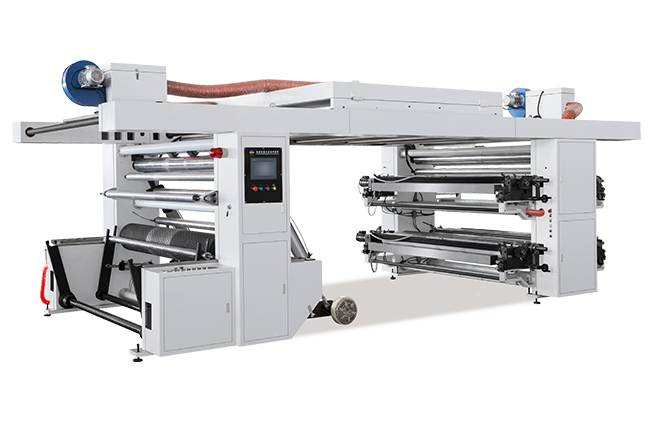
Flexographic printing machines (matching your color requirements)
-
Die-cutting machines for bottom and sidewall blanks
-
Slitting machines for paper roll processing
-
Dust extraction systems
Downstream Equipment (Post-Forming)
| Equipment Type | Function | Impact on Labor |
| Automatic collection unit | Catches and stacks finished cups | Essential at speeds above 80 cups/min |
| Counting system | Tracks production volume | Provides real-time production data |
| Bagging machine | Wraps counted stacks in film | Reduces manual packaging labor significantly |
| Cartoning machine | Packs bagged cups into boxes | Further reduces labor for end-of-line operations |
| Palletizing system | Stacks cartons on pallets | Optional for large-scale operations |
For packaging solutions that integrate with forming lines, you can explore the Paper Cup Packaging Machine line.
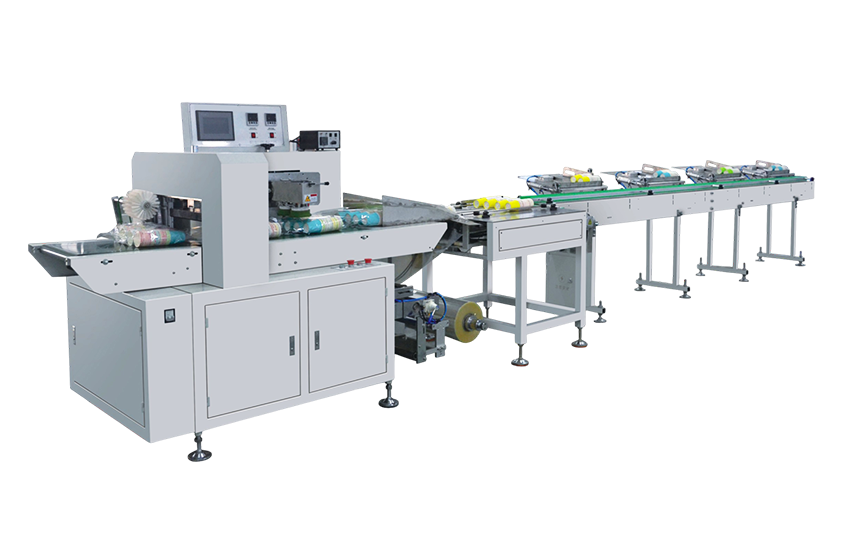
Line Balancing
The capacity of all equipment should be matched. A forming machine rated for 150 cups/min paired with a packaging machine rated for 50 packs/min creates a bottleneck—packaging becomes the constraint, and you cannot realize the forming machine's full value.
Step 6: Consider Changeover and Product Flexibility
Changeover time is often the hidden killer of effective capacity. A machine rated for 200 cups per minute loses significant throughput if it spends 30–45 minutes each time you switch cup sizes.
Understanding the Changeover Impact
Consider a line that runs three cup sizes per shift. If each changeover takes 30 minutes, you lose 90 minutes of production time per shift—nearly 15–20% of effective capacity. Over a year of two-shift operation, this difference can exceed 300 hours of additional production time—equivalent to 37.5 extra production days.
Key Changeover Features
1. Recipe Storage (Touchscreen Control)
-
Operators store parameters for each cup size (sealing temperature, timing, pressure)
-
Next time the order comes up, the operator recalls the recipe and the line is running in minutes
-
Some systems report changeover reductions from 45 minutes to under 10 minutes
2. Quick-Change Molds
-
Traditional bolted mold changes typically take 25–30 minutes
-
Quick-change carriers can reduce this to 5 minutes or less
-
Look for tool-less designs where possible
3. Modular Station Design
-
Ability to add or remove stations as product requirements change
-
Important if you anticipate expanding into double-wall or specialty products
For applications involving insulated cup structures, refer to the Double Wall Paper Cup Machine technical overview.
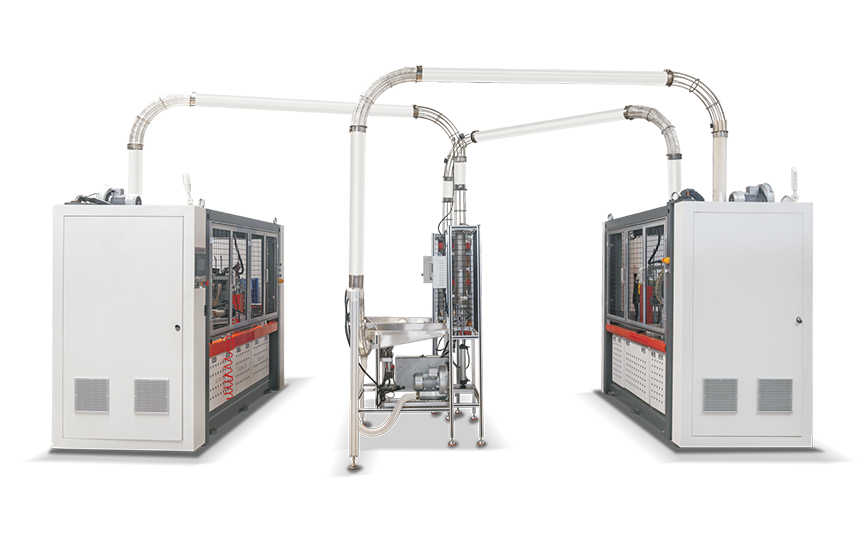
Changeover Testing Checklist
Before committing to a line, run a changeover test with your actual size range:
Check 1: Time the switch from your smallest cup size to your largest. Include cooling sealing heads, swapping molds, recalibrating sensors, and running test cups until consistent seals are achieved. Total changeover under 20 minutes is good; under 12 minutes indicates excellent tool-less design.
Check 2: Run 500 cups on both your lightest and heaviest paperboard. Inspect side seams and bottom seals for consistency. If the lighter stock burns or the heavier stock fails to seal, the machine lacks sufficient thermal control range.
Check 3: Run the machine at rated speed for 30 minutes and count stacker interruptions. A well-designed stacker should run for hours without a single jam.
Step 7: Build Quality Control Into the Production Line
Quality control should be an integrated part of the production line, not a separate inspection step after forming.
Inline Inspection Technologies
Vision Inspection Systems:
-
Detect rim defects, bottom leakage, and print registration errors
-
Automatically reject faulty cups before they reach packaging
-
Typical systems can handle speeds up to 200+ cups/min
Photoelectric Monitoring:
-
Detects misfeeds, registration errors, and jams
-
Stops the machine when an issue occurs, preventing damage
-
Reduces need for constant operator attention
Seal Quality Monitoring:
-
Tracks sealing temperature, timing, and pressure
-
Alerts operator if parameters drift out of specification
-
Optional integration with quality management systems
Preventative Maintenance Schedule
Regular maintenance prevents unplanned downtime:
| Task | Frequency | Rationale |
| Lubrication (automated systems) | Continuous | Automated lubrication reduces wear and extends machine life |
| Heater inspection | Weekly | Heater failures cause seal quality issues; early detection prevents scrap |
| Mold condition check | Monthly | Worn molds cause cosmetic defects and sealing problems |
| Full machine inspection | Quarterly | Identifies wear patterns before failure occurs |
| Main bearing replacement | As specified by manufacturer | Typical interval: 5+ years with proper maintenance |
Example Production Line Configurations
Configuration A: Flexible Multi-Size Line (Medium Volume)
Product Mix: 8oz, 12oz, 16oz cups (40%, 35%, 25%)
Target Output: 120 cups/min sustained
| Component | Specification | Rationale |
| Forming machine | Semi-servo with recipe storage | Balances cost and flexibility for medium volume |
| Drive system | Open cam with automatic lubrication | Reliable for medium-speed operation |
| Sealing | Hot air with adjustable temperature range | Covers PE-coated materials |
| Changeover | Quick-change molds (10–15 min) | Multiple sizes require efficient changeovers |
| Automation | Auto-collection unit + photoelectric detection | Reduces labor and maintains quality |
| Packaging | Semi-automatic bagging | Matches forming speed |
Configuration B: High-Volume Dedicated + Flexible Line
Product Mix: 12oz (70% of volume), various other sizes (30%)
Target Output: 160–180 cups/min sustained
| Component | Specification | Rationale |
| Dedicated 12oz line | Cam-driven enclosed gearbox | Rugged reliability for single-size high-volume production |
| Flexible secondary line | Servo-driven with quick-change | Handles all other sizes with efficient changeovers |
| Sealing | Ultrasonic on flexible line | Broad material compatibility for diverse products |
| Automation | Fully automatic collection + bagging | Minimizes labor costs at high speeds |
| Quality control | Vision inspection on both lines | Maintains consistency across all products |
How to Plan Your Production Line Step by Step
Here is a consolidated summary of the planning workflow:
Step 1: Define Product Portfolio
-
List all cup/bowl sizes, materials, and structures you plan to produce
-
Identify high-volume products that may justify dedicated lines
Step 2: Calculate Required Capacity
-
Use the capacity formula to determine required sustained speed
-
Apply the 80% utilization rule when selecting equipment ratings
Step 3: Match Materials to Sealing Technology
-
Determine whether your materials require hot air or ultrasonic sealing
-
Consider future material changes (e.g., transitioning to PLA)
Step 4: Select Forming Technology
-
Choose between servo, hybrid, or cam-driven based on changeover frequency and production volume
-
Verify station configuration matches your material and product requirements
Step 5: Plan Upstream and Downstream Equipment
-
Determine whether you need in-house printing and die-cutting
-
Select packaging equipment that matches forming speed
Step 6: Evaluate Changeover Capability
-
Test changeover time with your actual size range
-
Verify recipe storage and quick-change tooling meet your needs
Step 7: Design Layout and Material Flow
-
Organize factory into preparation, forming, and packing zones
-
Plan straight-line or U-shape flow to minimize cross-traffic
Step 8: Build Quality Control and Maintenance Plans
-
Specify inline inspection requirements
-
Establish a preventative maintenance schedule
FAQ
Q: What is the difference between a flexible line and a dedicated line?
A flexible line can produce multiple cup sizes and materials with reasonable changeover times (typically 5–20 minutes). A dedicated line is optimized for a single cup size and material, offering higher sustained speeds but no ability to switch products without significant downtime.
Q: How long should a changeover take on a flexible line?
For a well-designed flexible line with quick-change tooling and recipe storage, changeovers should take 5–15 minutes between common sizes. Changeovers involving different materials (e.g., PE to PLA) may take longer due to heating parameter adjustments.
Q: Can I run both PE and PLA on the same machine?
Yes, but only if the machine has sufficient heating control range and consistent temperature stability. Ultrasonic sealing systems typically handle both materials better than hot air systems, as PLA is heat-sensitive and requires lower, more stable heat application.
Q: What is the minimum speed for automatic stacking?
Automatic stacking becomes essential at speeds above 80 cups per minute. Below this speed, manual handling is manageable. At higher speeds, cups exit the machine at 2+ cups per second, making manual collection impractical.
Q: How much space is needed for a complete production line?
Space requirements vary based on product size and equipment. A typical line with forming machine, automatic collection, and bagging requires approximately 150–200 square meters. Adding in-house printing and die-cutting increases space to 250–350 square meters.
Q: Do I need separate tooling for each cup size?
Yes. Each cup size requires a specific mold set including forming turret, bottom punch, knurling wheels, and rim curling dies. For flexible lines, investing in quick-change carriers for each mold set significantly reduces changeover time.
Conclusion
Planning a flexible disposable cup production line is a structured process that starts with understanding your product requirements and works systematically through technology selection, capacity planning, and integration of upstream and downstream equipment.
The key decisions—sealing technology, drive system, changeover capability, and automation level—should be driven by your specific product mix and production targets. A well-planned line balances the need for flexibility with the requirement for sustained throughput, delivering quality cups efficiently across your entire product portfolio.
Once you have clarified these decision factors, comparing the specific specifications of available equipment becomes the next logical step. For a comprehensive comparison of available configurations, visit the Paper Container Products overview page.
Related Reading
-
How to Choose Paper Cup Equipment for High-Volume Production
-
Understanding the Total Cost of Ownership in Paper Cup Manufacturing
-
Comparing Drive Systems: Servo vs Cam vs Hybrid for Paper Cup Machines
-
Material Compatibility Guide: PE, PLA, and Beyond
-
Maintenance Planning for High-Volume Paper Cup Lines